There are two kinds of people in this world:
People who see a chile pepper and think, “Ooooh, flavor.”
And people who see a chile pepper and immediately start looking for the nearest glass of milk.
I respect both.
But here's the thing: chiles aren't just about heat.
Treating every chile like nothing more than a way to make food spicy is a little like saying wine is just fermented grape juice. Technically? Sure. But we're missing all the fun.
Chiles can be fruity, smoky, earthy, grassy, sweet, floral, raisiny, citrusy—and occasionally hot enough to make you reconsider several of your life choices.
So today, we're leaving the sauce bottle on the shelf and talking about one of my favorite tools in the kitchen.
The chile pepper.
🌶️ First Things First: Where Does the Heat Come From?
Meet capsaicin.
Capsaicin is the compound responsible for the burning sensation we experience when eating hot peppers. Interestingly, it doesn't actually "burn" your mouth in the traditional sense. It activates receptors involved in sensing heat and pain.
Your brain essentially gets the message:
WE ARE ON FIRE.
Meanwhile, the jalapeño is sitting there completely innocent.
And contrary to something many of us were taught, most of the capsaicin isn't actually concentrated in the seeds. It's primarily found in the pale inner tissue—the placenta or pith—where the seeds attach.
The seeds can certainly pick up capsaicin from contact, but if you're trying to tame a pepper, removing that inner membrane is where you'll make the bigger difference.
There's your first bit of kitchen trivia.
🔥 Meet the Scoville Scale
Chile heat is commonly described using Scoville Heat Units (SHU).
The basic idea is simple:
Higher number = bigger fire.
But here's where things get interesting.
A pepper's heat can vary depending on the specific cultivar and growing conditions, so Scoville numbers are better thought of as ranges rather than guarantees.
Here's a rough tour through the neighborhood:
ChileApproximate Heat
Bell Pepper: 0
Poblano: 1,000–2,000
Jalapeño: 2,500–8,000
Serrano: 10,000–23,000
Cayenne: 30,000–50,000
Thai Chile: 50,000–100,000
Habanero: 100,000–350,000
Ghost Pepper: 800,000–1,000,000+
Carolina Reaper: Around 1.4–2.2 million
At some point we stop seasoning dinner and start testing our relationship with God.
🌶️ But Heat Isn't Flavor
This is the part I really want home cooks to understand.
The best chile isn't necessarily the hottest chile.
As a chef, I'm far more interested in what a pepper brings to the dish than how badly it can hurt somebody.
Take a few favorites.
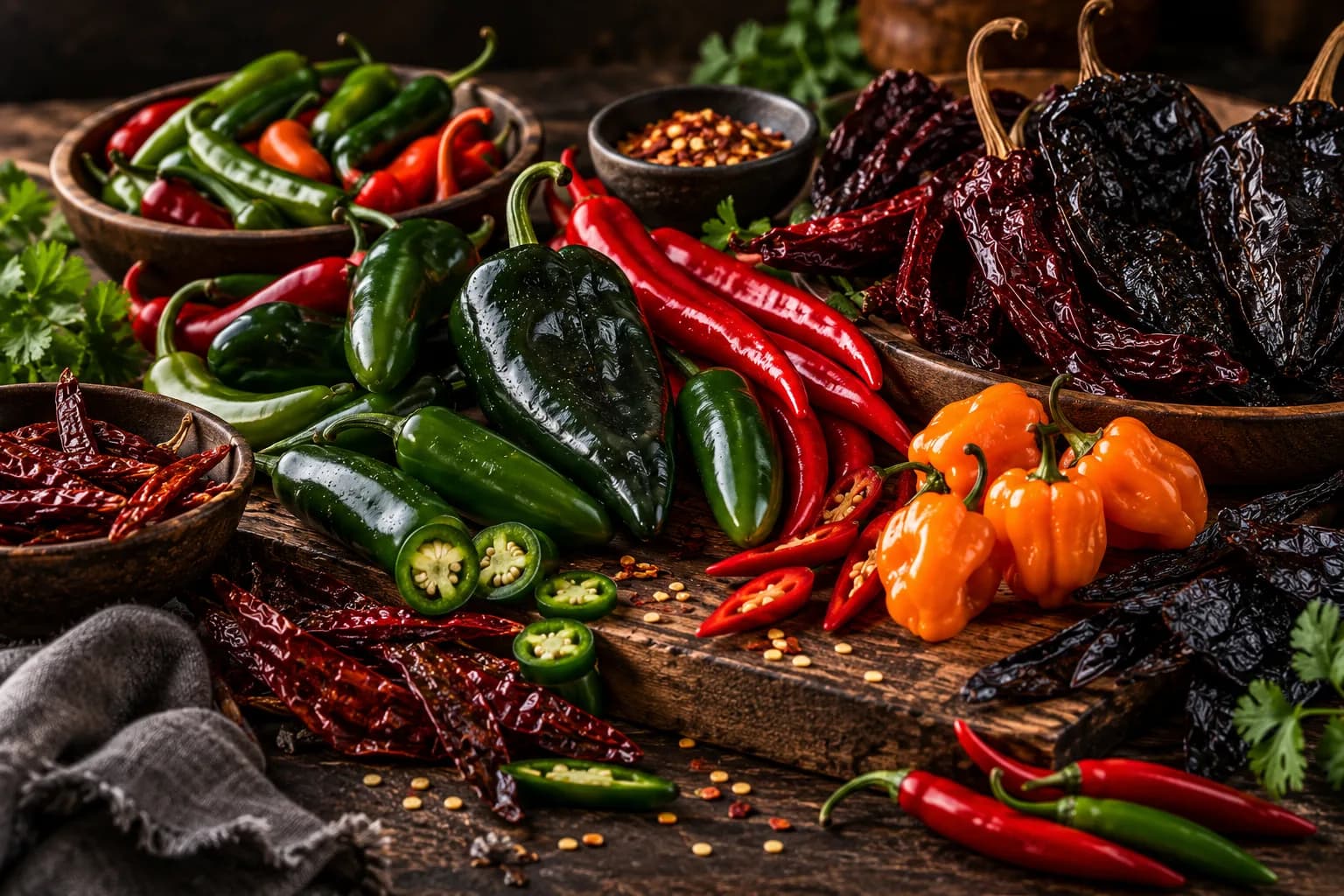
Poblano — Mild, earthy and gorgeous when roasted. Char that skin, peel it away, and you've got something completely different from the raw pepper.
Jalapeño — Bright, green and grassy with approachable heat. Roast or smoke it and its personality changes dramatically.
Serrano — Similar fresh character to jalapeño but sharper, cleaner and generally hotter. Fantastic in salsas.
Chipotle — Here's a fun one: chipotle isn't a completely different species of pepper. It's a smoked, dried ripe jalapeño. That's where all that deep, smoky personality comes from.
Habanero — Hot? Absolutely. But underneath that heat is an incredible fruity, almost tropical character. Used with restraint, it's beautiful.
Ancho — Another transformation. An ancho is a dried ripe poblano. Deep, sweet, earthy and almost raisin-like.
That's the magic of chiles.
Fresh versus dried. Green versus ripe. Raw versus roasted. Smoked versus unsmoked.
One ingredient can have a dozen personalities.
🔥 A Chef's Rule: Build Heat. Don't Weaponize It.
Here's where I get a little opinionated.
Heat should have a purpose.
I don't want someone's first reaction to my food to be:
HOLY SH*T THAT'S HOT.
I want:
Wait...what IS that?
Then another bite.
Then maybe a little warmth starts building.
That's good heat.
You should still be able to taste the chicken. The tomato. The garlic. The citrus. The herbs.
Heat should support flavor—not assassinate it.
Unless you're entering a chile-eating contest.
Then Godspeed.
🌶️ Want Less Heat? Want More?
If you're cooking at home, you have a surprising amount of control.
For less heat, remove the inner pith and seeds, use less pepper, or choose a naturally milder variety.
For more heat, leave more of that inner tissue intact or simply move up to a hotter chile.
And remember:
You can always add heat.
Removing it once you've turned dinner into molten lava is considerably more difficult.
Taste as you go.
Your eyebrows will thank you.
🔥 What If You Ate Something WAY Too Hot?
First instinct:
WATER.
Unfortunately, water isn't particularly helpful because capsaicin doesn't dissolve well in it. You mostly succeed in moving the experience around your mouth.
Dairy can be more useful because milk proteins—particularly casein—can help interact with the oily capsaicin.
So if you've just made a terrible decision involving a habanero:
Reach for milk, yogurt, sour cream, or another dairy-based option.
And perhaps spend a few quiet moments reflecting on what brought you here.
🌶️ Final Word From the Vicious Kitchen
Chiles are one of those ingredients that remind me why cooking never gets boring.
One little pepper can bring sweetness.
Smoke.
Fruit.
Earthiness.
Acidity.
Heat.
Or enough firepower to temporarily make you fluent in languages you don't speak.
But the goal isn't always to make food hotter.
The goal is to make food more interesting.
So the next time you're standing in front of the chile section at the grocery store, grab one you've never cooked with before.
Roast it.
Char it.
Dry it.
Blend it.
Taste it.
Learn what it does.
Because great cooking doesn't come from always knowing exactly what you're doing.
Sometimes it starts with:
“Hmm. I wonder what happens if I use this?”
Welcome back to The Vicious Kitchen. 🌶️